MEMPHIS, TN, July 01, 2026 /24-7PressRelease/ — Anthony “Amp” Elmore a Memphis born 5-Time World Kickboxing Champion who is Memphis 1st Independent 35mm Theatrical Filmmaker whose 1988 Film Release “The Contemporary Gladiator” is not only the 1st Kickboxing film in World Film History this 1988 film release is also the 1st Buddhist Biopic in world film history. This Black Memphis produced film is the 1st Industrial trade deal between an African Country and an African/American business.
To understand the relevance of Anthony “Amp” Elmore and Black Freedom 250th — The First Hemispheric Black Celebration one must first review the websites that Anthony “Amp” Elmore personally built and designed to tell his story and how and why this effort can lead to the “First Hemispheric Black Celebration.” Let’s 1st start with the 1st website titled This sight is designed in both English and Spanish. This sight asks Mexico’s Female President Claudia Sheinbaum to make Juneteenth a Bi-national Holiday.
Click here to view the Website Orange Mound Juneteenth.com
Please understand that in Memphis, Tennessee Anthony “Amp” Elmore face for the record White, Supremacy, Racism and Black on Black Racism. This document notes that Kevin Kane the head of Memphis Tourism is noted by Anthony “Amp” Elmore as the unelected Mayor of Memphis whereas Anthony “Amp” Elmore calls out that the legacy of Dr. Martin Luther King Jr. is being “Pimped” for tourism and Black Memphis leaders via silence are complicit to Memphis White Supremacy, Racism and Black on Black Racism, whereas as Dr. King wrote “Silence is betrayal.” Anthony “Amp” Elmore asks the Dr. King Center in Cuba to speak out against the betrayal of Dr. King in Memphis.
Kevin Kane’s Memphis Tourism reads: Celebrate America’s 250th Anniversary in Memphis. The advertisement reads further: “Memphis, Tennessee, is one of the best cities to visit for America’s 250th anniversary in 2026. As the birthplace of rock ‘n’ roll, a cornerstone of the Civil Rights Movement, and home to world-famous barbecue, Memphis has shaped American culture for over 200 years and the city is celebrating the Semiquincentennial with special events, historic tours, and live music throughout the year.” Readers should ask how could the City were Dr. King was brutally assassinated become the cornerstone of the Civil Rights Movement.
The corporate logic behind Kevin Kane’s marketing campaign relies on a standard playbook of commodity capitalism, where profound historical trauma is sanitized and repackaged as a commercial asset. By labeling Memphis a “cornerstone of the Civil Rights Movement” in the context of America’s **250th anniversary**, the tourism framework attempts to perform a rhetorical magic trick: transforming the geographic site of a brutal, state-sanctioned assassination into a civic achievement.
To a tourism bureau, the presence of the National Civil Rights Museum at the Lorraine Motel represents a high-traffic destination capable of generating massive revenue. Kevin Kane’s logic dictates that because a monumental event occurred there, the city itself can claim moral and historical custody of the legacy, completely separating the physical space from the hostile municipal forces that brought Dr. King to Memphis in the first place—specifically, the fight against crushing poverty, hazardous working conditions, and institutional racism during the **1968 sanitation strike**.
This Kevin Kane corporate marketing strategy represents a profound disrespect to Black America because it weaponizes a collective trauma for economic gain while gaslighting the descendants of the struggle.
By flattening Dr. King’s radical, anti-capitalist critique of American society into a passive tourist attraction, the campaign strips the movement of its ongoing urgency. It asks Black Americans to celebrate a city that historic documentation shows actively persecuted Dr. King up until his final breath. Furthermore, it creates a jarring contradiction: the city uses Black historical suffering to invite global visitors and secure millions in tourism dollars, yet it simultaneously participates in the active erasure of local Black agency.
This is seen clearly in the ongoing underfunding of historic Black neighborhoods and the installation of inaccurate municipal monuments—such as the **1890 welcome sign** in Orange Mound that credits a white real estate broker rather than documenting the community’s true **1879 Reconstruction triumph** of self-determination.
Simultaneously, pairing “civil rights” in the exact same breath as “birthplace of rock ‘n’ roll” and “world-famous barbecue” serves as a calculated signal of safety to White America. It communicates to white tourists, corporate sponsors, and investors that Memphis has neutralized its history of racial violence and packaged it into a comfortable, easily consumable weekend itinerary.
This branding reassures a white audience that the radical, unsettling demands of Black liberation have been safely locked away in a museum, transformed into a historical backdrop that will not interrupt the music or the dining. It signals that the city’s power structures have domesticated the memory of the struggle, offering a sanitized version of American history where systemic white supremacy is treated as a solved, past-tense issue rather than an ongoing, living reality in **2026**.
Click here to view the website titled: African Cultural Embassy . Com These sites are the bridge between Latin America and Black America
Dr. Martin Luther King’s full quote is: “There comes a time when silence is betrayal our lives begin to end the day we become silent about things that matter. In the end we remember not the words of our enemies but the silence of our friends.”
Click here to view the April 5, 2026 video titled: African Cultural Embassy
Anthony “Amp” Elmore is in a battle in Memphis where Dr. Martin Luther King Jr. was killed April 4, 1968. The fight and battle Anthony “Amp” Elmore is fighting is that of White Supremacy, Racism and Black on Black Racism whereas Black Memphis Elected officials are complicit to White Supremacy and the erasure of Black History in Memphis.
In 2006 Anthony “Amp” Elmore invited Memphis tourism Kevin Kane to his home in Orange Mound to view “The Safari House Museum Culture and Educational Center” the 1st All African home in America. Whereas Anthony “Amp” Elmore created a legitimate Tourist attraction in Orange Mound whereas tour buses would visit the home to connect with African Heritage Kevin Kane racially dismissed the idea, whereas in 2006 Memphis opened a “Cotton Museum” supported by Memphis Tourism.
On December 7, 2025 Black Memphis Mayor Paul Young unveiled the historic Orange Mound welcome sculpture. The landmark sign that dates the area as the nation’s oldest African American neighborhood established in 1890 is a sign of betrayal and erasure of Black Memphis history that falsely names White Real Estate broker as the founder of Orange Mound in 1890.
Black Memphis Mayor Paul Young and Black Memphis leaders are complicit as part of a culture and plan to erase Orange Mound as the Black Reconstruction Triumph in 1879. Black Memphis Mayor Paul Young’s decision to install the White Racist 1890 founding sign in Orange Mound represents more than a historical mistake; it reflects a deeper cultural pattern in Memphis where Black leadership is complicit in the erasure of Black Reconstruction triumphs. By choosing 1890 instead of the documented 1879 founding date, Black Memphis Mayor Young reinforces a narrative that removes Orange Mound from its rightful place as the earliest and most significant post‑Civil War Black landownership achievement in America.
In 1878 during the Yellow fever epidemic in Memphis 30,000 Whites departed Memphis in 3 days leaving a majority Black Citizens. The 1879 date marks the moment when formerly enslaved Black people, emerging from the trauma of the Yellow Fever crisis and the political manipulation the State of Tennessee instead of allowing Blacks an opportunity to be the leader in Memphis the White Tennessee legislators voided Memphis charter and turned Memphis into a taxing district to suppress Black voting power.
Black Memphians saved Memphis and built a sovereign community in the County that was “Orange Mound.” Black people with their own hands, their own labor, and their own agency built up the community with their own hands. In order to replace that truth with a White Supremacist narrative in 1890 White Real Estate broker E.E. Meacham purchased 60 acres of land 1.8 miles away whereas his plans were to sell 890 lots 25 x 100 lots to Blacks who wanted to build.
Not only did Blacks did not purchase those 25 x 100 lots designed for a shotgun house. There exist not one ill refutable fact regarding the E.E. Meacham plans to sell 890 lots. The math does not compute or add up. You cannot put 890 homes of 890 lots. The facts of science is not enough in Memphis to challenge Memphis White Supremacy, racism and Black on Black racism. There exist no tax records, images or absolutely no evidence that the E.E. Meacham Shotgun house community was ever built or impossible to build, however Black Memphis Mayor installed his sign that credits E.E. Meacham for founding the Black Community of Orange Mound.
In this video you can see first hand how both Black Memphis Mayor Paul Young and Black Shelby County Mayor Lee Harris outright Bamboozle Black Memphis and created fraud via the White owned “Orange Mound Arts Council.”
When Black Memphis leaders accepted or promoted this altered timeline, they participate—whether knowingly or through institutional pressure—in a long‑standing pattern where Memphis’s political culture prioritizes convenience, paternalism, and city branding over historical accuracy and Black agency. The result is a public narrative that diminishes the power of Black self‑determination, hides the political brilliance of the 1879 founders, and aligns with a broader strategy that keeps Black communities disconnected from their own sovereign history.
This 1890 Orange Mound sign date is not a small error but a symbolic act of erasure: it rewrites the origin story of a community whose true birth in 1879 stands as one of the greatest triumphs of Black Reconstruction in the United States. Black Memphis Mayor Paul Young, Black Shelby County Mayor Lee Harris betrays Black America via their erroneous 1890 Orange Mound birthday.
Just view the video you will find ill refutable evidence of Black Memphis leader’s corruption selling out and bamboozling gas lighting Black Memphis. In past Whites would sell out and betray Black Memphis. Today in 2026 watch the video and view how Black Memphis Mayor Paul Young and Black Shelby County Mayor Lee Harris sell out and run a con job on Black Memphis.
Anthony “Amp” Elmore launched the “African Cultural Embassy” to fight Memphis White Supremacy, Racism and Black on Black Racism. Elmore created not just a residency Anthony “Amp” Elmore created “A Revolution.”
On May 7, 2026 the White dominated Tennessee Republican legislators erased the majority African American 9th Congressional leaving it almost impossible to have Black representation in Congress. Anthony “Amp” Elmore came up with a solution via the “African Cultural Embassy” Elmore created a slogan; “They erased our District, we expanded our Destiny.”
Click here to view the website; Black Freedom 250th.Com
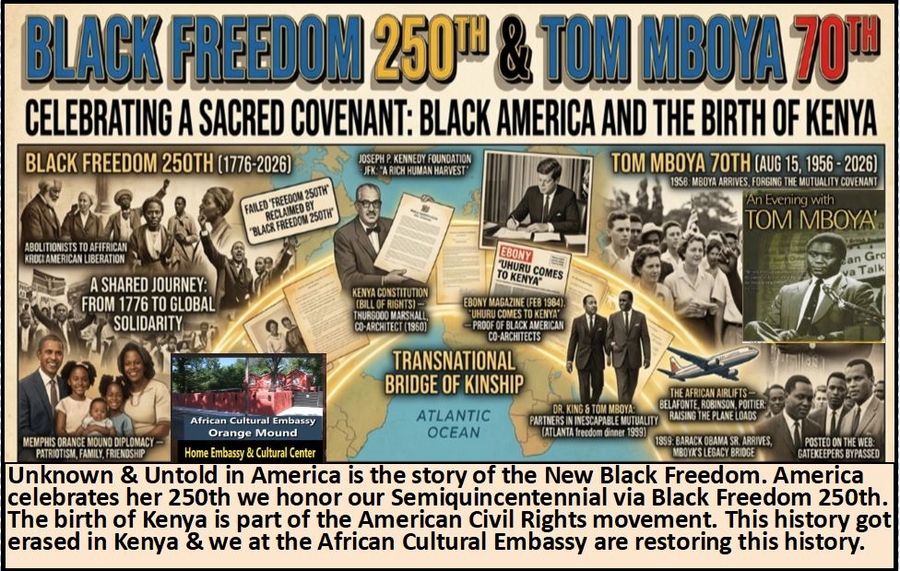
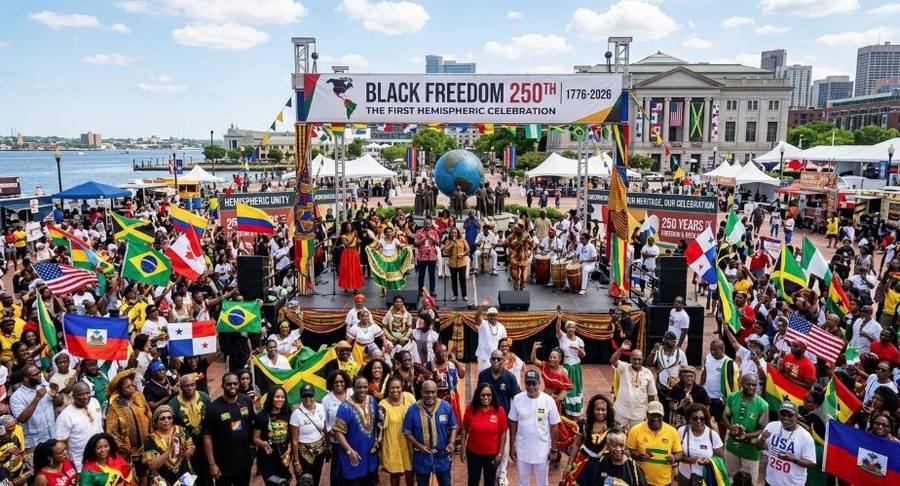
Anthony “Amp” Elmore explains that there is nothing greater than being Black and living in America to be a part of The United States 250th birthday known as the Semiquincentennial or 250th birthday on July 4, 2026. This date and celebration marks the birth of “Black Freedom 250th — The First Hemispheric Black Celebration.”
In the history of the Americas there has never been an official, globally recognized holiday or synchronized event explicitly named a “Black Hemispheric Celebration.” Such a celebration in the Western Hemisphere is remote, logistical impossible whereas historical, and geopolitical barriers make organizing such a singular event across multiple continents highly complex and almost impossible.
Anthony “Amp” Elmore explains that there is nothing more American than for its citizens to celebrate Freedom. While America celebrates freedom from Great Britain we Black Americans in concert with America 250th we celebrate Black Freedom 250th — The First Hemispheric Black Celebration.
Rather than a single formal event, Black cross-border unity existed through a patchwork of independent, regional festivals, academic summits, and political movements. The primary reasons a singular, unified “Black Hemispheric Celebration” does not exist were Linguistic and National Divisions.
The African Diaspora in the Western Hemisphere is divided by deep linguistic barriers. Black communities across North America, Central America, South America, and the Caribbean speak English, Spanish, French, Portuguese, and various Creole languages. Because cultural infrastructure and media networks are largely organized within these distinct linguistic and national borders, organizing a single cohesive, hemisphere-wide celebration was once a massive communication challenge and an almost impossibility.
One has to face differing Historical Timelines. A uniform celebration is difficult to establish because the historical milestones of liberation vary drastically across the hemisphere. For example: the United States commemorates Black freedom on Juneteenth marking the 1865 end of chattel slavery in Texas.
Haiti celebrates its independence on January 1st to honor the world’s first successful revolution by enslaved people in 1804. Brazil observes Black Consciousness Day (Dia da Consciência Negra) on November 20th to honor Zumbi dos Palmares, a leader of runaway slave communities. Haiti is having challenges but they are part of Black Freedom 250th.
Because these foundational historical moments are so distinct, Black communities have naturally advanced their own localized national holidays rather than a shared calendar date. The Vast Scope of Pan-Africanism is broad and massive.
When Black activists, scholars, and artists seek unity across borders, they generally skip the “hemispheric” boundary (which only covers the Americas) and look globally toward Pan-Africanism. Movements like the historic Pan-African Congresses or massive cultural festivals like Afro future in Ghana deliberately connect the entire global diaspora directly back to the African continent, rendering a strictly “hemispheric” designation less common.
What Exists Instead; while there is no single master holiday, organizations continuously build cross-border cultural spaces that mirror a hemispheric approach. Examples include: Regional Festivals: Events like the Afribembé Festival-2025-black-constellation-mapping-our-joy-dreams-and-liberation) in New York specifically curate spaces to link Afro-Caribbean and North American ancestral memories.
Academic & Activist Coalitions: Transnational groups frequently organize “Hemispheric Black Studies” conferences to align political efforts against systemic racism and share artistic traditions across the Americas.
From the African Cultural Embassy in Historic Orange Mound in Memphis, Tennessee emerged Black Freedom 250th — The First Hemispheric Black Celebration, a sovereign cultural movement born from the oldest African American neighborhood in America built by Black people for Black people, rising from a community whose very existence exposes the suppressed truth that Black people in the Americas are not merely descendants of forced importation but descendants of sovereign Indigenous nations whose identity was erased to protect the economics of slavery, land seizure, and racial hierarchy.
Black Freedom 250th emerges from the Anthony “Amp” Elmore Orange Mound Home in Memphis not as a local initiative but as a continental declaration, a restoration of identity, a reclamation of sovereignty, and a hemispheric awakening that confronts the truth America has never admitted: that long before 1776, long before the slave codes, long before the racial categories that define the United States, Indigenous Black peoples lived on this land as sovereign nations whose identity was systematically destroyed through reclassification, census manipulation, and the weaponization of racial labels designed to strip them of land, treaty rights, and political status.
From Orange Mound, the African Cultural Embassy declares and celebrates that the story of Black people in the Americas is not confined to the transatlantic slave trade, because the official narrative — that millions upon millions of Black people were transported across the ocean and that every Black person in the Americas arrived as cargo — is not only mathematically improbable but politically convenient, serving the purpose of denying Black people any claim to Indigenous sovereignty, any claim to ancestral land, any claim to being original peoples of the hemisphere.
Unknown and untold to African Americans is the fact that DNA science is beginning to expose what oral history in Black families has preserved for generations: not all Black people in America came from Africa. This truth surfaced personally for Anthony “Amp” Elmore when his daughter pointed out that part of his ancestry did not trace back to Africa but to the Americas themselves, confirming what the elders in his family had always said — that his great‑great‑grandmother was both Black and Native American.
In Tennessee, this is not speculation; it is documented history. Many free Black people in Tennessee during the 1700s and 1800s were not Africans recently brought through the slave trade but Indigenous Black Americans whose identity was later erased through racial reclassification. These were Native peoples who happened to be Black, and because they were sovereign and not enslaved, they were later mislabeled to fit the racial categories imposed by the state.
The story of John Horse and the people who followed him to Mexico reveals this erasure clearly: they were falsely categorized as “Black Seminole Indians,” even though they were part of the Estelusti — a Native Black nation whose identity predated the United States. Mexico preserved the truth by naming them “Los Negros Mascogos,” meaning “birth of the Blacks,” acknowledging them as Indigenous Black Americans rather than African imports.
Across the United States, countless Native Black communities existed whose identities were destroyed through census manipulation, tribal roll exclusion, and the political need to deny Black people any claim to Indigenous sovereignty. Black Freedom 250th tells this story because it restores the truth that Black identity in the Americas is not singular, not limited to Africa, and not confined to the narrative of enslavement.
It is a hemispheric identity that includes Indigenous Black nations whose history has been erased, whose sovereignty was denied, and whose descendants are only now rediscovering the full truth of who they are. As always, please confirm historical details with trusted sources.
The African Cultural Embassy asserts openly that the erasure of Indigenous Black identity was not accidental; it was a deliberate system designed to transform sovereign peoples into enslaveable property by renaming them, reclassifying them, and removing them from tribal rolls so that their land could be seized without violating treaties.
This truth, buried for centuries, becomes the foundation of Black Freedom 250th, which restores the identity of Black people as African, Afro‑Indigenous, Afro‑Latin, and Native Black American, united not only by the shared trauma of enslavement but by the shared sovereignty of being original peoples of the Americas.
Black Freedom 250th expands this truth across the hemisphere, connecting African Americans to Afro‑Mexicans, Afro‑Indigenous Mascogos, Afro‑Colombians, Afro‑Cubans, Afro‑Brazilians, Garifuna communities, maroon nations, and the wider African diaspora whose liberation stories form a single continental arc. It declares that Juneteenth is not merely an American holiday but a hemispheric symbol of freedom preserved in Mexico for over 150 years by the Mascogo people, whose existence proves that Black freedom has always crossed borders.
Black Freedom 250th declares that Haiti’s revolution is not a Caribbean event but the first Black declaration of sovereignty in the hemisphere, a continental earthquake that reshaped global politics. It declares that Colombia’s palenqueros, who founded the first free Black town in the Americas, are not regional heroes but continental ancestors whose maroon sovereignty predates the United States.
One special note about “Black Freedom 250th” is the story of Colombia’s Former Black Vice President Francia Marquez whereas she is the key to assisting our efforts to create The First Hemispheric Black Celebration.
Black Freedom 250th declares that Cuba’s Mambí fighters, led by Antonio Maceo and the Afro‑Cuban independence army, are not simply Cuban patriots but hemispheric liberators whose struggle belongs to all African‑descended peoples.
It declares that Brazil’s quilombos are not relics but living sovereign communities whose resistance continues into the present. And it declares that the Indigenous Black peoples of North America — reclassified as “Negro,” “Colored,” and “Freedmen” to erase their sovereignty — are central to the true story of the Americas, a story that has been buried under centuries of racial categorization designed to protect land systems, treaty systems, and political systems built on erasure.
Black Freedom 250th declares that the erasure of Indigenous Black identity was the foundational act that made slavery possible, because a sovereign cannot be enslaved, a Native cannot be turned into property, and a nation cannot be erased unless its people are renamed and reclassified. Black Freedom 250th restores this truth by declaring that Black people in the Americas are not only descendants of Africa but descendants of Indigenous nations whose identity was destroyed to protect the expansion of the United States.
From Orange Mound, the African Cultural Embassy positions Memphis as the birthplace of hemispheric Black unity, the cultural capital of a continental movement that reconnects African‑descended peoples across borders, languages, and nations. It declares that Black Freedom 250th is not a commemoration but a correction, not a holiday but a restoration, not a regional event but a hemispheric awakening that reframes the 250th anniversary of the United States through the truth of Black sovereignty.
Black Freedom 250th declares that the hemisphere must finally recognize that Black freedom is the moral foundation of the Americas, that Juneteenth is a continental inheritance, that Indigenous Black identity is a suppressed truth, and that the African Cultural Embassy stands as the first sovereign cultural institution created by an African American to represent the hemisphere’s African‑descended peoples.
Black Freedom 250th is the moment when the Americas finally confront the truth that Black people were here before the nation, before the borders, before the racial categories, and that the story of Black freedom is not only an American story but a hemispheric story that belongs to every nation shaped by the African diaspora.
From Orange Mound, Memphis, Tennessee, the African Cultural Embassy declares that the hemisphere will no longer accept the erasure of Indigenous Black identity, the fragmentation of Black history, or the silencing of Black sovereignty. Black Freedom 250th is the first hemispheric Black celebration because it restores the full identity of Black people as sovereign peoples of the Americas, united by history, connected by liberation, and bound by a continental truth that can no longer be denied. Anthony “Amp” Elmore notes; what’s more American that learning that we are not just African we are American and honor “The Red White and Blue.”
Black Freedom 250th continues by declaring that the restoration of Indigenous Black identity is not merely an act of historical correction but an act of hemispheric sovereignty, because the erasure of Black Native Americans was the foundational lie that allowed the United States to build its racial, economic, and political systems without ever acknowledging the original presence of Black peoples on this land.
From the African Cultural Embassy in Orange Mound, this movement asserts that the 250th anniversary of the United States cannot be understood without confronting the suppressed truth that Black people were here before the nation, before the borders, before the racial categories, and that the official narrative of American history was constructed to deny Black people their rightful place as original peoples of the hemisphere.
This truth reshapes everything: it reshapes the meaning of Juneteenth, it reshapes the meaning of emancipation, it reshapes the meaning of citizenship, and it reshapes the meaning of sovereignty itself. It means that Black freedom is not simply a story of arrival from Africa but a story of belonging to the Americas, a story of Indigenous presence, a story of maroon sovereignty, a story of Afro‑Indigenous nations whose identity was destroyed so their land could be taken and their people could be turned into property.
Black Freedom 250th declares that the hemisphere must finally confront the fact that the racial categories used today — Black, Indian, Colored, Mulatto, Negro — were not created to describe people but to control them. These categories were invented to erase Indigenous Black nations, to divide Afro‑Indigenous families, to remove Black people from tribal rolls, to deny them land, to deny them treaty rights, and to deny them sovereignty.
Black Freedom 250th declares that this lie ends now. From Orange Mound, Memphis, Tennessee — the cultural capital of Black America — the African Cultural Embassy announces that the hemisphere will no longer accept the erasure of Indigenous Black identity, the fragmentation of Black history, or the silencing of Black sovereignty. It declares that the 250th anniversary of the United States must be reframed through the truth of Black presence, Black resistance, Black continuity, and Black nationhood.
Black Freedom 250th declares that African Americans are not simply descendants of Africa but descendants of Indigenous nations whose identity was destroyed to protect the expansion of the United States. It declares that Afro‑Mexicans, Afro‑Indigenous Mascogos, Afro‑Colombians, Afro‑Cubans, Afro‑Brazilians, Garifuna communities, maroon nations, and Native Black Americans share a single continental story of liberation that has never been told as one narrative — until now.
Black Freedom 250th declares that Juneteenth is not merely an American holiday but a hemispheric symbol of freedom preserved in Mexico, honored in Texas, remembered in maroon communities, and carried across borders by people whose identity was erased but whose sovereignty never died. It declares that Haiti’s revolution is not a Caribbean event but the first Black declaration of sovereignty in the hemisphere, a continental moment that reshaped global politics and inspired every liberation movement that followed.
It declares that Colombia’s palenqueros, Cuba’s Mambí fighters, Brazil’s quilombos, and the Indigenous Black peoples of North America are not regional stories but continental pillars of Black sovereignty.
Black Freedom 250th declares that the hemisphere must now recognize that Black freedom is the moral foundation of the Americas, that the African diaspora is not a scattered population but a continental nation, and that the African Cultural Embassy stands as the first sovereign cultural institution created by an African American to represent the hemisphere’s African‑descended peoples.
Black Freedom 250th declares that the Charter of Kinship — the constitutional document of this movement — restores the truth that Black people across the Americas are connected not only by ancestry but by sovereignty, by land, by culture, by resistance, and by a shared history that predates the United States. It declares that the hemisphere must now confront the truth that Black people were here before the nation, before the borders, before the racial categories, and that the story of Black freedom is not an American story but a hemispheric story that belongs to every nation shaped by the African diaspora.
Black Freedom 250th is the moment when the Americas finally face the truth that has been buried for centuries: that Black people were not simply brought to the Americas — many were already here. That Black people were not simply enslaved — many were sovereign. That Black people were not simply classified — many were reclassified out of existence. That Black people were not simply emancipated — many were restored to an identity that had been stolen. And that the 250th anniversary of the United States must be understood not as a celebration of the nation’s founding myths but as a reckoning with the truth of Black sovereignty, Black presence, and Black humanity.
In Memphis today, the contradiction between marketed history and lived Black truth is stark, and it reveals how individual leaders can shape or distort the destiny of an entire city. One writer observed that “the change in the character of a single individual is enough to change the destiny of a nation,” and Anthony “Amp” Elmore argues that this applies directly to Black Memphis Mayor Paul Young, whose choices — including the installation of an 1890 Orange Mound founding sign — functionally erase the 1879 Reconstruction triumph that made Orange Mound the first neighborhood in America built by Black people for Black people.
Elmore notes that Memphis Shelby County Film Commissioner Linn Sitler, backed by Kevin Kane of Memphis Tourism, also plays a role in controlling the city’s narrative, promoting a glossy “Celebrate America’s 250th Anniversary in Memphis” campaign that highlights rock ‘n’ roll, barbecue, and civil rights tourism while omitting the deeper truth that Memphis was once the largest inland slave market in the United States. The promotional language describing Memphis as “a cornerstone of the Civil Rights Movement” ignores the city’s long history of civil rights violations, racial violence, and systemic mistreatment of Black residents.
Even the celebration of rock ‘n’ roll overlooks the fact that early Black musical innovation was dismissed as “jungle music” and marginalized until appropriated by white performers. Today, Memphis lacks a single major African American–owned tourist institution dedicated to Black pride, culture, or sovereignty, and Orange Mound — the most important Black Reconstruction achievement in the city — is often presented through a diminished or inaccurate timeline that erases its true origins.
Elmore argues that when Black leaders participate in these narratives, whether through political pressure, institutional alignment, or silence, they become complicit in a broader cultural pattern that sanitizes Memphis history for tourism while erasing the foundational contributions of Black people. Black Freedom 250th exists to correct this record, restore the truth of Orange Mound’s 1879 founding, and confront the contradictions that shape how Memphis tells its story.
About Us
“If Lions were historians, hunters would no longer be heroes.” This powerful African proverb encapsulates the mission of the Orange Mound News Network (OMNN). Founded by Anthony Amp Elmore, OMNN aims to reclaim and reshape the narrative of Orange Mound through the power of filmmaking, education, and content creation. Our goal is to challenge the negative stereotypes and biased portrayals that have long plagued our community, creating a positive space for family, Black culture, history, and education.
Our Journey and Mission
Orange Mound, established as the first community in America built for Blacks by Blacks, has a rich history often overshadowed by negative stereotypes. Mainstream media and societal biases have painted Orange Mound as a “ghetto,” contributing to a 30% decline in property values while surrounding communities have prospered. The Orange Mound News Network was created to
counter this narrative and highlight the true spirit and resilience of our community.
Anthony Amp Elmore, a five-time world karate kickboxing champion, filmmaker, and community activist, has been a beacon of change in Orange Mound. With over five decades of community service, Elmore has dedicated his life to uplifting Orange Mound. From becoming a homeowner at 19, establishing businesses, to founding the Proud Black Buddhist World Association, Elmore’s contributions have been immense.
—
For the original version of this press release, please visit 24-7PressRelease.com here
Legal Disclaimer: The content on this page is syndicated from independent third-party providers. Kyrion Media makes no warranties or representations regarding the accuracy, completeness, legality, or reliability of the information, including text, images, videos, or licenses. If you are affiliated with this content or have any complaints, copyright concerns, or requests for removal, please contact us at retract@kyrionmedia.com with the specific URL of the content in question. We will review and address valid requests promptly.