
How behavioural science is reshaping event security planning for large gatherings in Singapore
SINGAPORE, April 29, 2026 /24-7PressRelease/ — As Singapore’s event calendar continues to fill with large-scale public, cultural, and corporate gatherings, a growing body of research suggests that understanding crowd psychology is becoming increasingly important to effective event security planning. Rather than viewing crowds as unpredictable or irrational, contemporary studies frame crowd behaviour through social identity, communication, and interaction dynamics, with direct implications for safety, movement, and operational response.
Event safety experts such as the UK Health and Safety Executive note that knowledge of group behaviour can help organisers and security planners reduce risk, support cooperation, and prevent avoidable crowd-related issues. This is especially relevant in environments where large visitor numbers, screening requirements, and constrained movement zones need to be managed at the same time.
Key Insight: Crowd Behaviour Is Social, Not Random
Current crowd science emphasises that people in large gatherings often act in coordinated and socially meaningful ways, rather than simply reacting through panic or instinct. This shifts how event security should be approached. In practice, it means crowd safety depends not only on visible security presence, but also on how access points are designed, how information is communicated, and how movement is guided throughout the event.
Industry research also shows that seemingly minor weaknesses in crowd management, such as bottlenecks, unclear instructions, or poorly coordinated entry procedures, can escalate quickly under high-density conditions.
Practical Takeaways for Event Security Planning
– Communication matters: Clear and respectful instructions can support calmer, more orderly movement.
– Flow matters: Layouts, entry points, and screening processes should be planned to reduce congestion and friction.
– Coordination matters: Security teams need to maintain consistent coverage while adapting to changing crowd conditions on the ground.
These principles are particularly relevant in Singapore’s event landscape, where many gatherings take place in tightly managed, high-attendance environments.
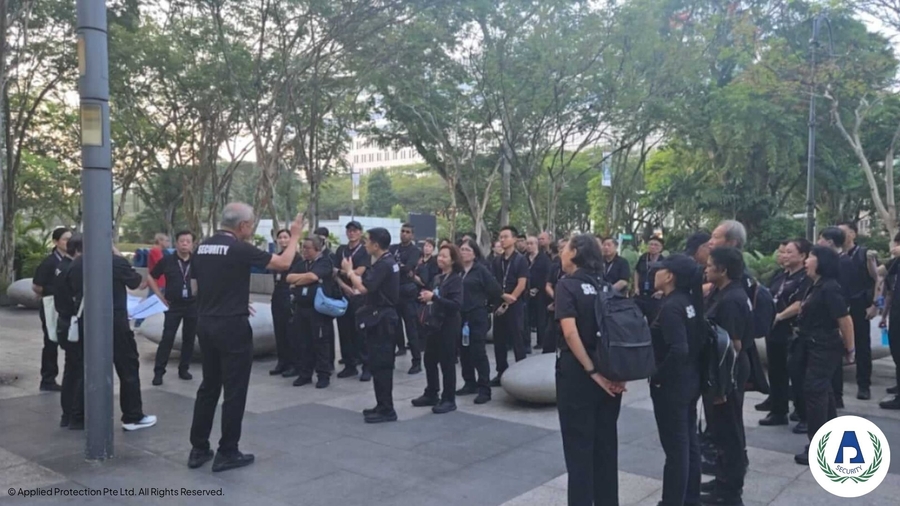
A recent illustration came during the Istana Open House for Chinese New Year 2026, where Applied Protection supported security operations at a protected official venue. The engagement involved screening support, security post deployment, and crowd flow coordination across a high-traffic public event. With large visitor turnout and strict procedural requirements, the operational priority was to maintain smooth entry, steady post coverage, and orderly visitor movement throughout the day. The event was carried out without disruption, highlighting how disciplined deployment and clear coordination remain essential to effective event security.
Applied Protection is a PRD-licensed security company in Singapore providing reliable event security, crowd management, risk assessment, and operational support for a range of venues and live environments. Drawing on evidence-based practices, they collaborate with organisers to enhance safety protocols and crowd strategies with advanced technological solutions, at a trusted value. For insights on your next event, visit applied-protection.sg/event-security/.
—
For the original version of this press release, please visit 24-7PressRelease.com here
Legal Disclaimer: This article was provided by an independent third-party content provider. Kyrion Media makes no warranties or representations in connection with it. All information is provided “as is” without warranty of any kind. This content may not have been reviewed by our editorial staff and is published automatically. The views expressed in this article are those of the author and do not necessarily reflect the views of Kyrion Media. All trademarks are the property of their respective owners. If you are affiliated with this article and would like it removed, please contact retract@kyrionmedia.com.